What is reverse osmosis and how does it work?
A reverse osmosis (RO) filter pushes water through a semipermeable membrane that traps the vast majority of dissolved solids: excess minerals, chlorine, fluoride, heavy metals and many other impurities. The result is neutral-tasting, high-purity water, ideal for drinking and cooking.
A typical under-sink system has 5 to 7 stages: sediment pre-filters, activated carbon filters, the reverse osmosis membrane and a post-filter that fine-tunes the final taste.
The real benefits of reverse osmosis
- The best taste: it removes the chlorine and mineral taste that much tap water has.
- For cooking: coffee, tea and food taste cleaner.
- Low cost per liter: after the initial purchase, filtered water costs just cents per gallon.
- Fewer plastic bottles: an average family stops buying hundreds of bottles a year.
What you should know before you buy
- It requires under-sink installation with a drain connection. Most people install it in 1-2 hours with basic tools.
- It produces wastewater: traditional systems discard some water for every gallon produced (a typical ratio of 3:1 or 4:1). Modern tankless models waste less.
- Scheduled maintenance: pre-filters every 6-12 months, membrane every 2-3 years. Budget $60-$120 a year for replacements.
- It also removes beneficial minerals: some models (such as those that add alkaline minerals) put minerals back in to improve the taste.
Under-sink systems to buy
The ones marked “Reviewed” are the systems we have analyzed in depth on this site. The rest are under-sink options with the manufacturer's data — and note: not all of them are reverse osmosis, even though they live under the sink; each card says so.
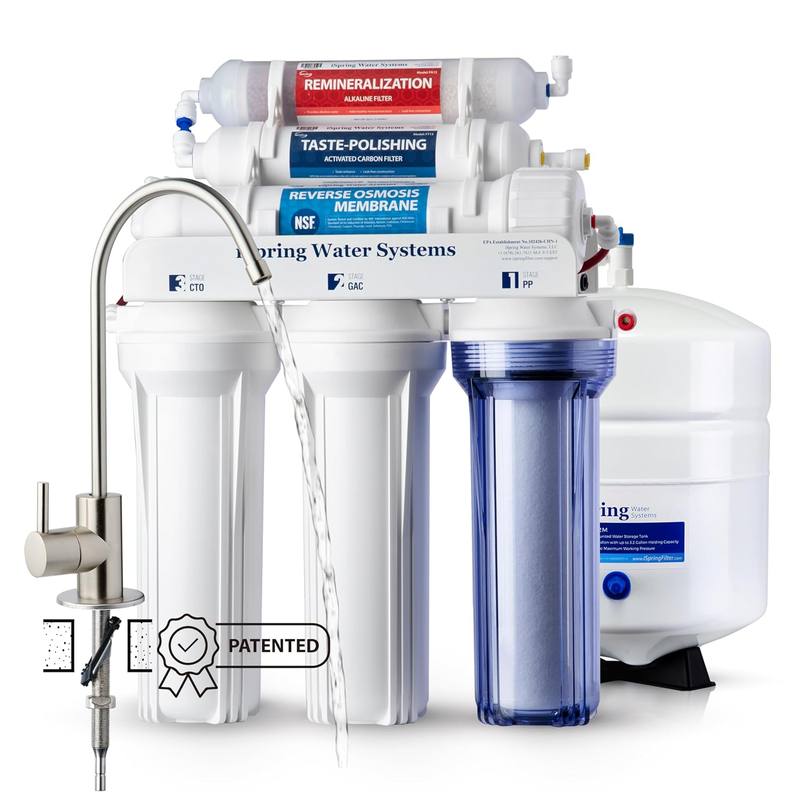
iSpring RCC7AK
Reverse osmosis · 6 stages · With tank
~$200 on Amazon
- ✓ The best-selling reverse osmosis system, with more than 20,000 reviews
- ✓ 6-stage system with an alkaline filter that adds minerals back in
- ✓ The option we recommend to most families for drinking water
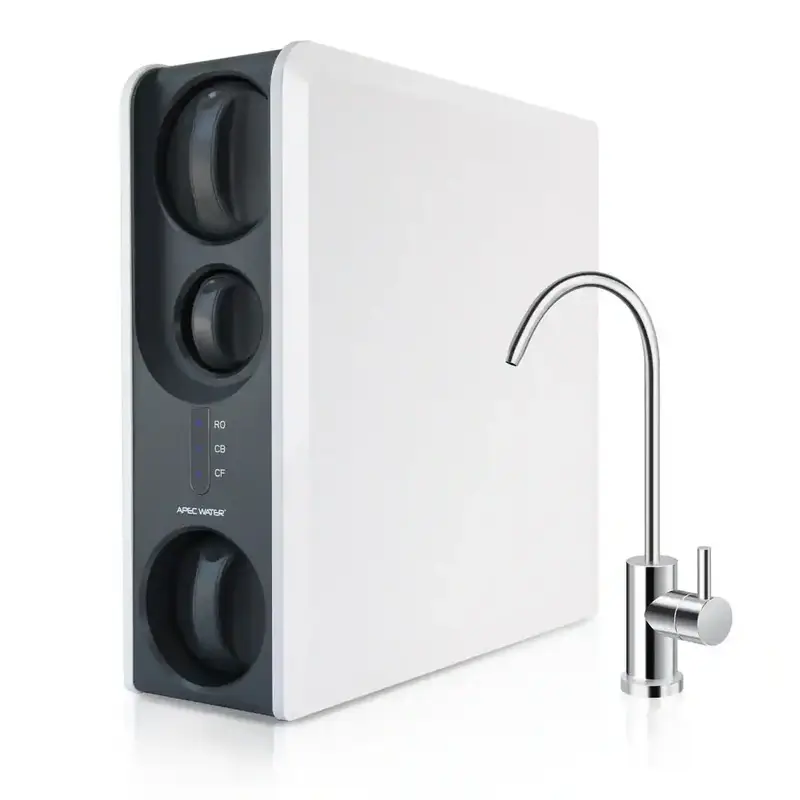
APEC ROTL-600
Tankless reverse osmosis · 600 GPD
~$600 on Amazon
- ✓ Tankless: more compact under the sink and wastes less water
- ✓ Built-in filter replacement alert
- ✓ If space or water use matters to you, it is worth it
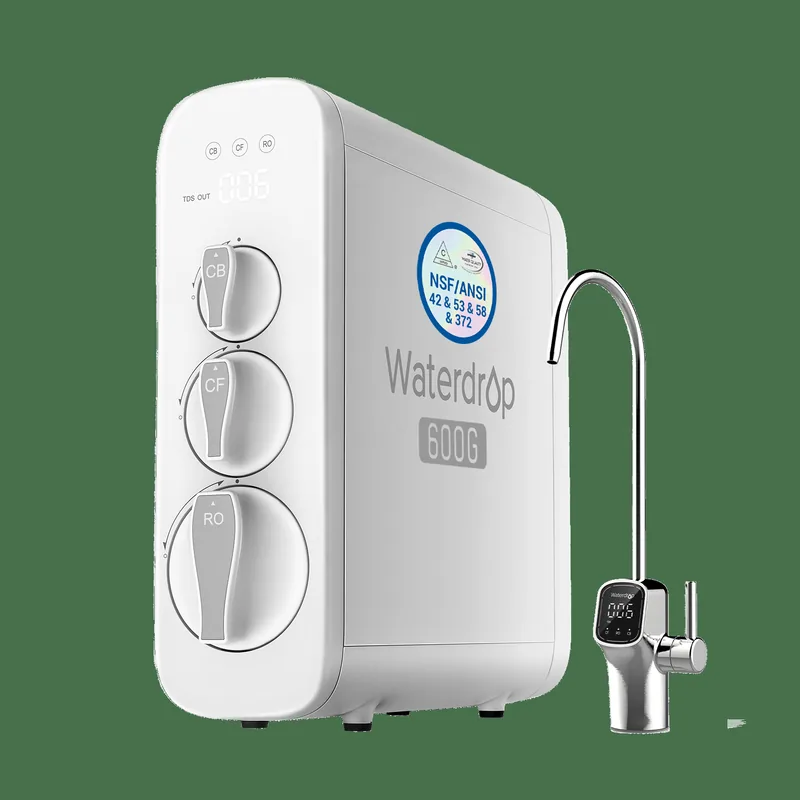
Waterdrop G3P600
Tankless reverse osmosis · 600 GPD · With display
~$550 on Amazon
- ✓ Tankless reverse osmosis: fits where a tank will not
- ✓ Smart display with filter-change alerts
- ✓ With independent certifications, as we explain in the review
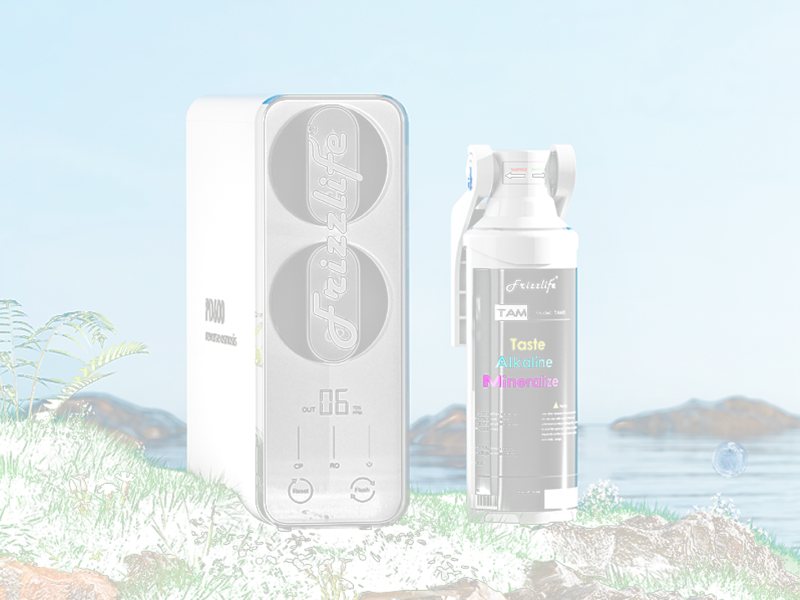
Frizzlife PD600-TAM3
Tankless reverse osmosis · With remineralizer
~$400 on Amazon
- ✓ 600 GPD flow with a 1.5:1 drain ratio, according to the manufacturer
- ✓ TAM3 cartridge with alkaline remineralization
- ✓ The brand states NSF 42/53/58 and 372 certifications for the system
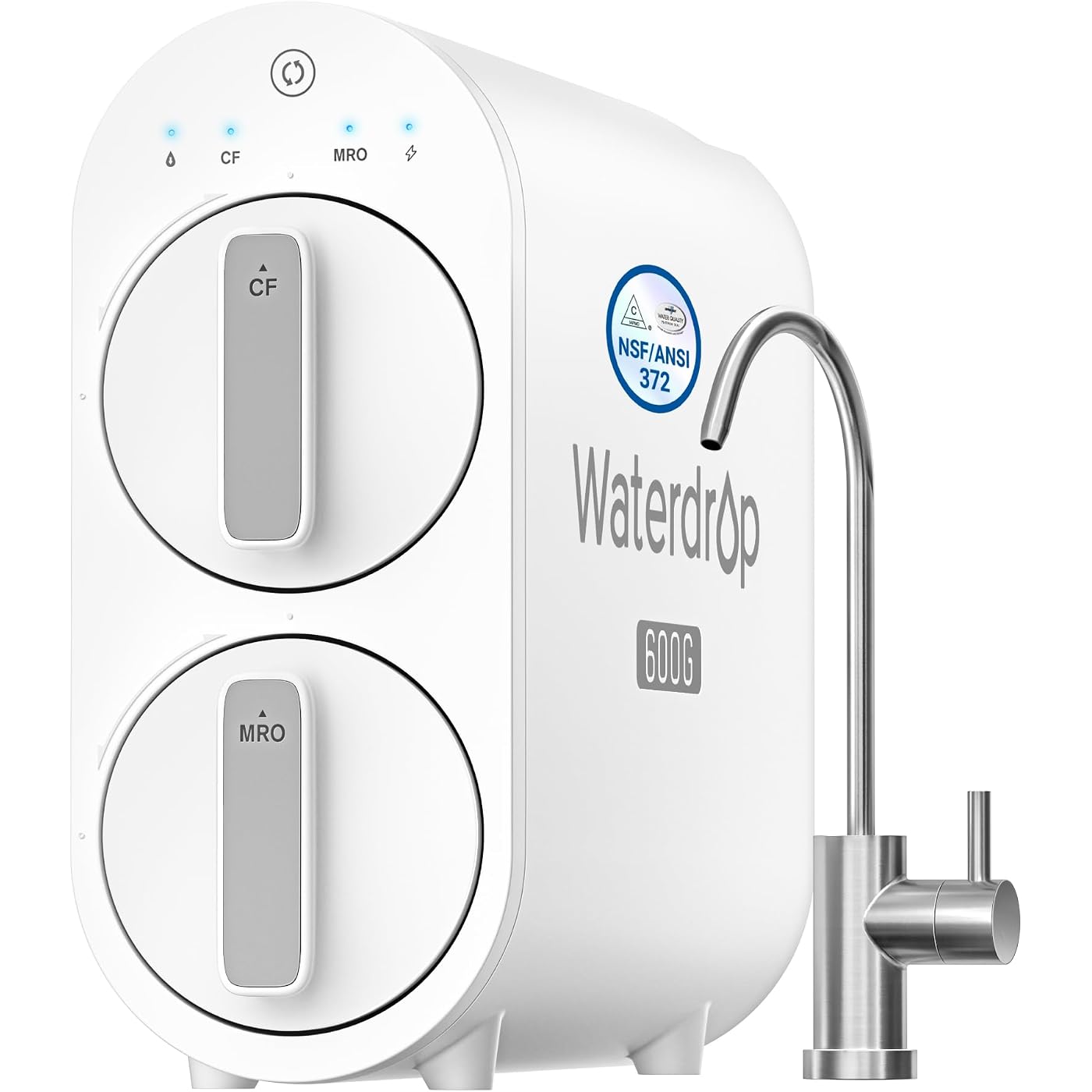
Waterdrop G2P600
Tankless reverse osmosis · 600 GPD
~$289 on Amazon
- ✓ Tankless: frees up space under the sink
- ✓ 2:1 drain ratio, according to the manufacturer
- ✓ Faucet with an LED filter-life indicator
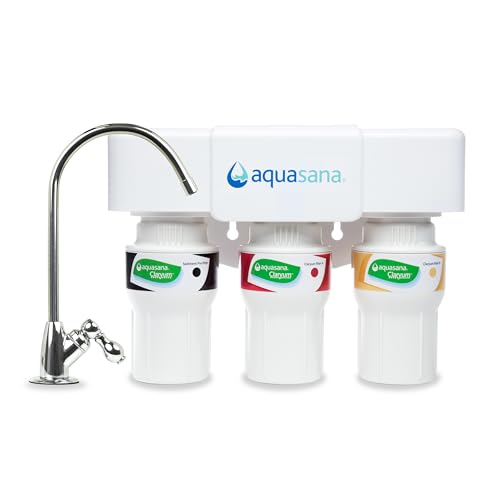
Aquasana Claryum AQ-5300.56
Under sink · NO osmosis (carbon + catalytic)
~$126 on Amazon
- ✓ Not osmosis: it keeps the minerals and produces no wastewater
- ✓ NSF 42, 53, 401 and P473 certified according to the brand (including PFOA/PFOS)
- ✓ 800-gallon cartridges (about 6 months)
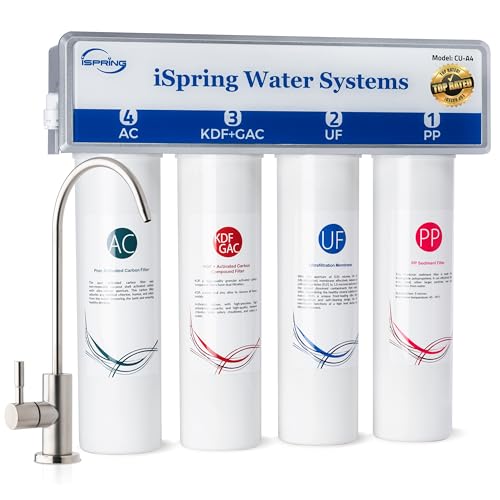
iSpring CU-A4
Under sink · 0.01-micron ultrafiltration
~$122 on Amazon
- ✓ Not osmosis: ultrafiltration membrane, no pump, no electricity and no drain
- ✓ Keeps the minerals: it does not lower TDS
- ✓ Dedicated faucet outlet with twist-on cartridges
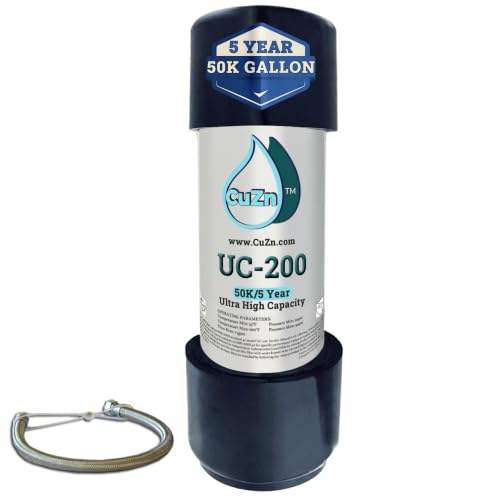
CuZn UC-200
Under sink · The cartridge that lasts 5 years
~$120 on Amazon
- ✓ Not osmosis: a single sealed cartridge of KDF-55 and coconut carbon
- ✓ 50,000 gallons: about 5 years without changing cartridges
- ✓ Connects to the cold water line, with no dedicated faucet
Featured reverse osmosis models
| Model | Best for | Keep in mind | Approx. price* |
|---|---|---|---|
iSpring RCC7AK | Best seller with more than 20,000 reviews; includes an alkaline stage that adds minerals back in | System with a tank (takes up space under the sink) | ~$200 See it on Amazon |
APEC ROTL-600 | Tankless: no tank, more compact and less water waste | Higher upfront price | ~$600 See it on Amazon |
Reverse osmosis or a simple filter?
If your water only has a slight chlorine taste, an under-sink carbon filter (cheaper, with no complex installation) may be enough. If the water has a lot of minerals, a persistent bad taste, or you want maximum purity, reverse osmosis is the answer. Take the 2-question test in our buying guide →
Recent articles on water filtration
Your bottled water has 240,000 plastic particles per liter (science confirmed it)
A Columbia and Rutgers study revealed hundreds of thousands of invisible plastic particles per liter of bottled water. The verified data and the options you have.
Read article →Frequently asked questions about reverse osmosis
How does reverse osmosis work?
Water is pushed under pressure through a semipermeable membrane with microscopic pores that trap dissolved salts, heavy metals and other contaminants. The result is water with a very low level of total dissolved solids (TDS), much "lighter" on the palate.
What is an under-sink reverse osmosis filter?
It is the most common type for the home: a compact system that installs under the kitchen sink and has its own dedicated faucet. The iSpring RCC7AK is the classic example: several filtration stages plus the reverse osmosis membrane in a standard cabinet.
Does reverse osmosis help with hard water and scale?
Yes. By trapping dissolved minerals (calcium and magnesium), it reduces scale buildup in the water you drink and cook with. To protect the whole house from hard water, a whole-house system or a water softener is a better option.
What is TDS in water and why does it matter?
TDS stands for total dissolved solids: the sum of the minerals, salts and metals present in the water, measured in ppm with a TDS meter. A high TDS is not always dangerous, but it usually means worse taste. Reverse osmosis lowers it dramatically.
Does a reverse osmosis filter reduce chlorine?
Yes, thanks to its activated carbon pre-filters, which reduce chlorine before the water reaches the membrane. That also extends the membrane's service life.
How much does a home reverse osmosis system cost?
Home under-sink systems run between $150 and $300 depending on the brand and the number of stages. Add replacement filters on top of that: pre-filters every 6-12 months and the membrane every 2-3 years.