What is a TDS meter?
It is a pocket-sized device, shaped like a thick pen, that estimates the total dissolved solids (TDS) in a glass of water: you dip the tip in, wait a few seconds and read the number in ppm (parts per million). It works it out by measuring the electrical conductivity of the water: the more dissolved salts, minerals and metals there are, the more it conducts and the higher it reads. It costs little, fits in a drawer and is good for three very specific things: finding out whether your tap water is loaded with minerals, checking that your reverse osmosis system is still performing (by comparing before and after) and watching for when a filter — like the ones in ZeroWater pitchers — is used up.
TDS meters to buy
None of these meters carries the “Reviewed” badge: we have not tested them on this site. They are models with a verified listing on Amazon and the manufacturer's data — choose by range, accuracy and features, not by promises.
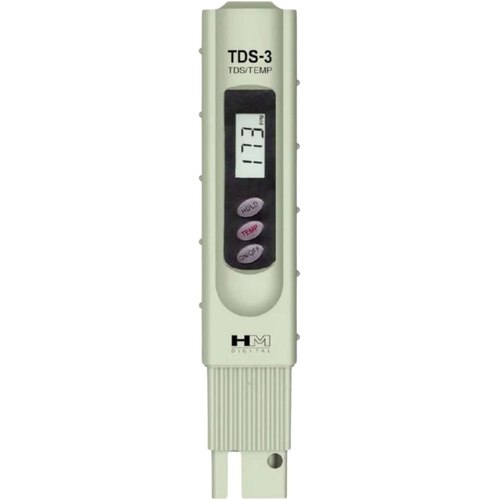
HM Digital TDS-3
TDS meter · With thermometer and carrying case
~$15 on Amazon
- ✓ Range of 0 to 9,990 ppm with 1 ppm resolution
- ✓ ±2% accuracy and built-in digital thermometer
- ✓ Hold function, auto shut-off after 10 minutes and carrying case included
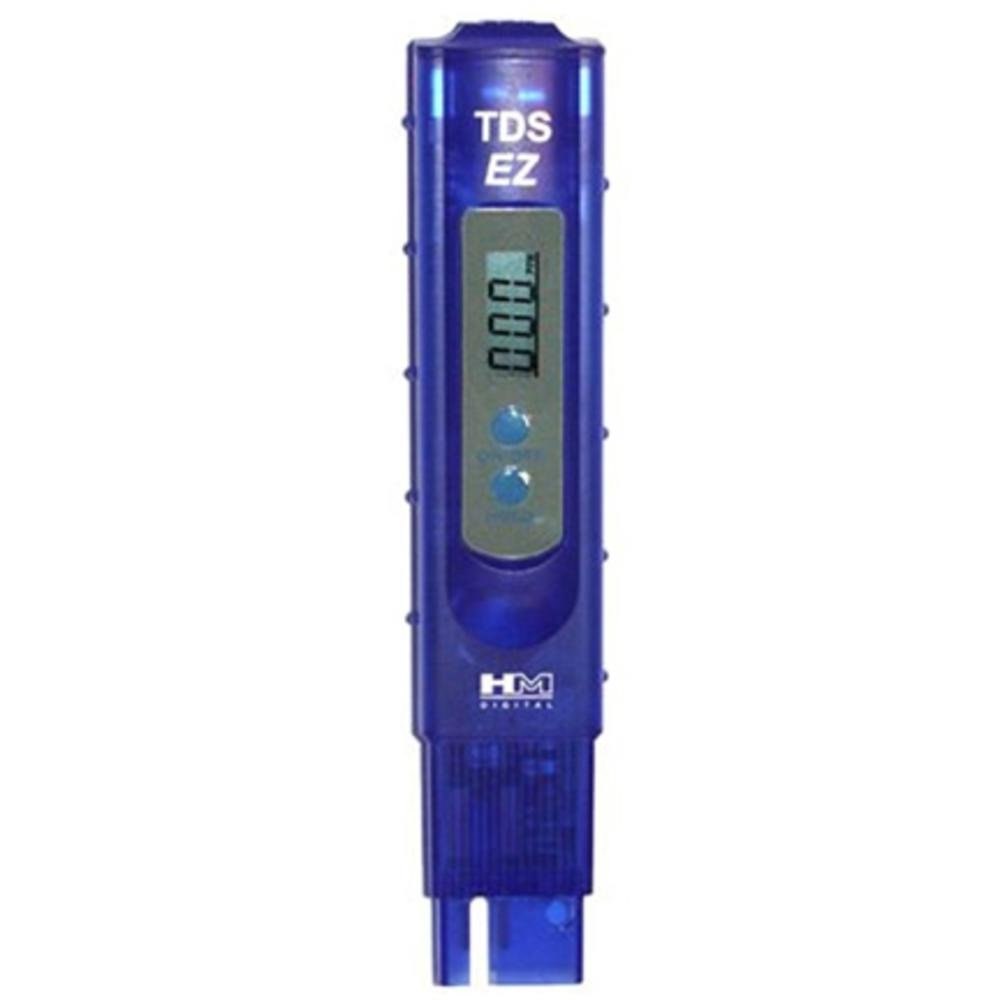
HM Digital TDS-EZ
TDS meter · HM Digital's budget version
~$14 on Amazon
- ✓ Range of 0 to 9,990 ppm with 1 ppm resolution
- ✓ ±3% accuracy, factory-calibrated with a 342 ppm NaCl solution
- ✓ Hold function and auto shut-off to save battery
HM Digital AquaPro AP-1
TDS meter · Magnetic body for the fridge
~$24 on Amazon
- ✓ Range of 0 to 5,000 ppm with 1 ppm resolution and ±2% accuracy
- ✓ Measures TDS and temperature with automatic temperature compensation (ATC)
- ✓ Magnetic body to stick it on the fridge and one-button digital calibration
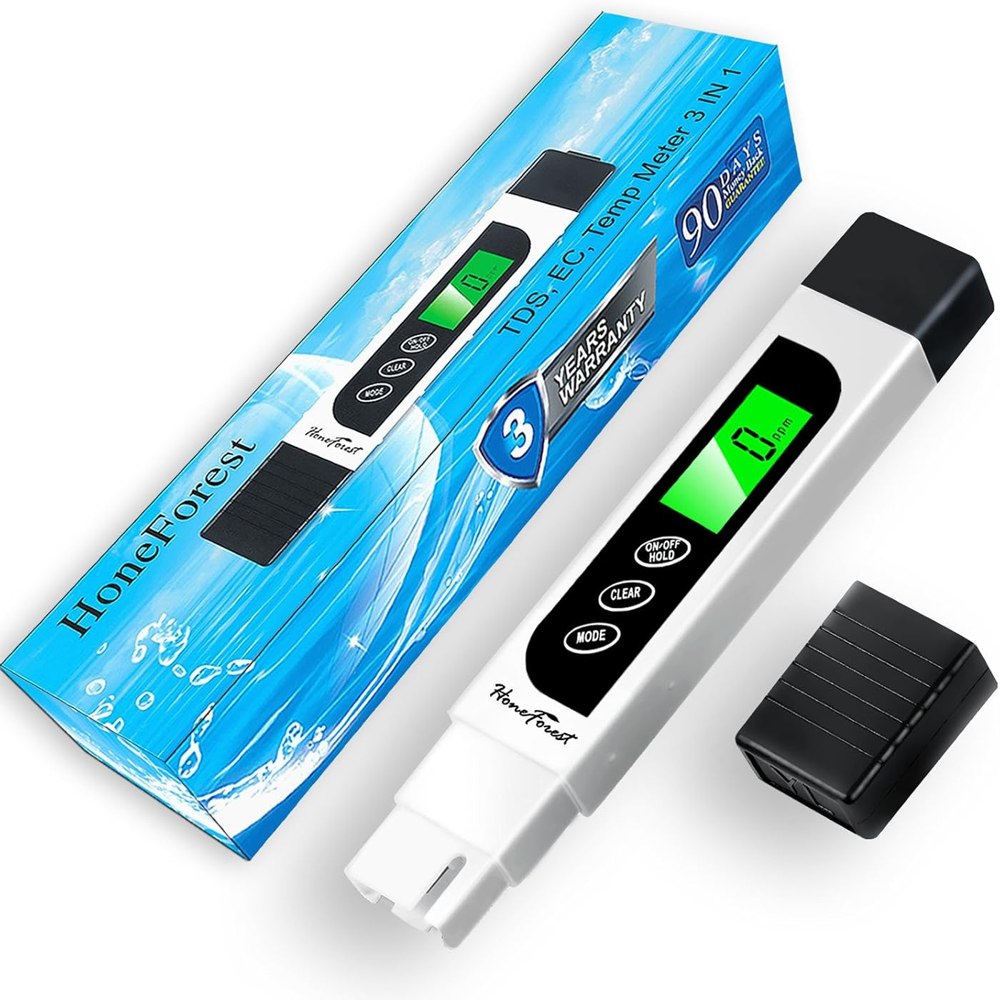
HoneForest 3-in-1
TDS/EC meter · Also measures temperature
~$14 on Amazon
- ✓ Measures TDS, conductivity (EC) and temperature in a single device
- ✓ TDS range of 0 to 9,990 ppm with ±2% accuracy
- ✓ Backlit display with reading lock, titanium probe and case included
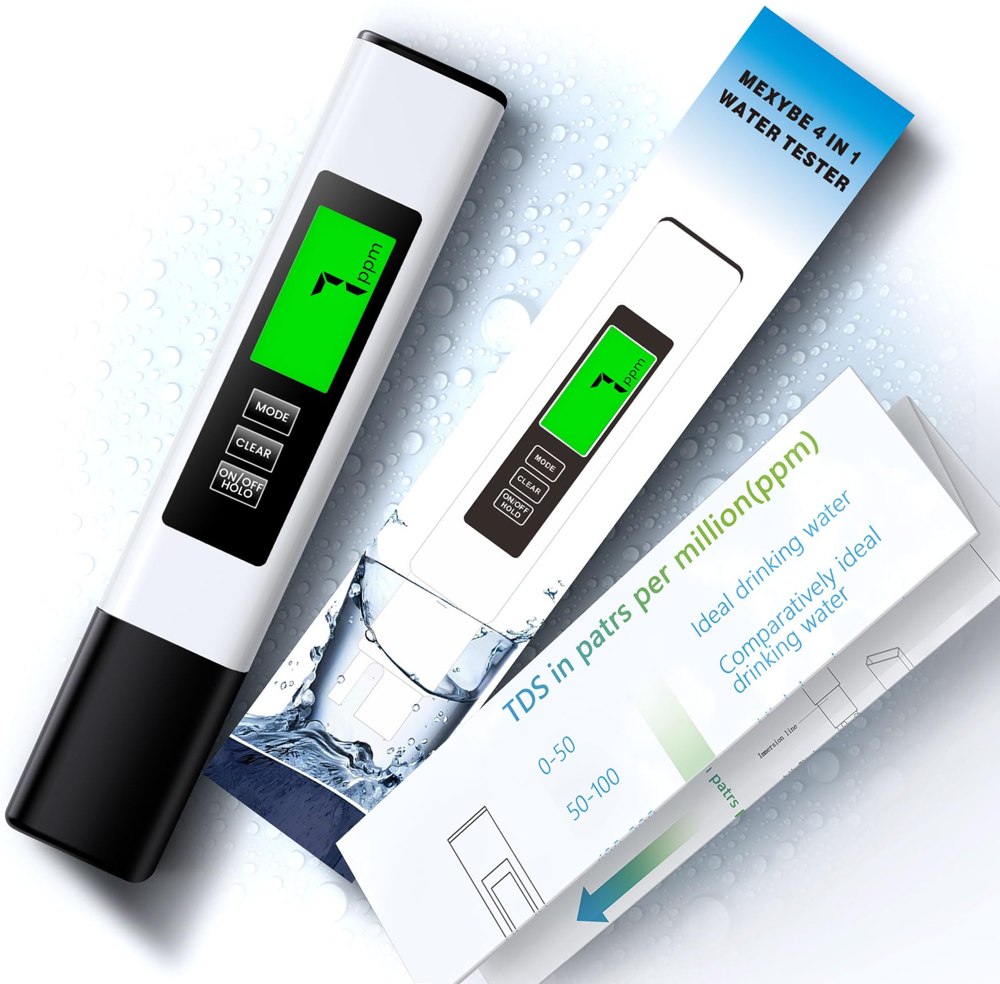
MEXYBE 4-in-1
TDS/EC meter · Temperature in °C and °F
~$9 on Amazon
- ✓ Measures TDS, conductivity (EC) and temperature in °C and °F
- ✓ Range of 0 to 9,999 ppm with a titanium alloy probe
- ✓ Large backlit display, automatic reading lock and TDS chart printed on the back
What a TDS meter does NOT measure (this matters)
Let's be clear, because this is where buyers get misled the most: a TDS meter does not detect lead, bacteria, viruses, pesticides or any specific chemical. It only adds up everything dissolved into one number. That means a low TDS does not guarantee the water is safe, and a high TDS does not automatically mean it is dangerous: it could simply be calcium and magnesium, the normal minerals in hard water. The number is a guide — mostly for taste and for keeping an eye on your filter — but it does not replace a lab test or your water company's quality report. If your concern is a specific contaminant, this meter is not the tool.
Who is it for (and who is it not for)?
- It is a good fit if: you have or are considering a reverse osmosis system, you use a ZeroWater-type pitcher (its filter is changed when the TDS stops reading 0), you have well water, or you simply want to know whether your water is soft or hard before spending on a filter.
- It is not a good fit if: you want to certify that your water is drinkable or rule out a specific contaminant: for that you need a lab test, not a pocket meter.
How to use your meter (and read the number without worrying)
- The measurement: fill a clean glass with water, take the cap off the meter, dip the tip in without going past the max line, move it a little to release bubbles and wait for the number to stabilize. Now you have your TDS in ppm.
- The taste reference we use on this site: under 100 ppm usually tastes good; over 300, the taste is already noticeable. It is not a health boundary: it is about palate and about scale in your appliances.
- To keep an eye on your filter: measure the water before and after filtering on the day you install the system and write down both numbers. If over the months the after number creeps up toward the before number, the filter is asking to be changed — in ZeroWater pitchers the signal is that it stops reading 0.
- What the number doesn't tell you: which solids they are. 250 ppm of calcium and magnesium is normal hard water; the meter can't distinguish that from anything else. If you have a safety concern, get a lab test.
Keep exploring
- How to choose based on your water — the meter is the first step in this guide: with your number in hand, choosing a filter is much easier.
- Honest review of the ZeroWater ZP-010 — the pitcher that includes its own TDS meter and is changed based on its reading.
- Reverse osmosis — the system that lowers TDS the most; a meter lets you check it is still performing.
- All filters by type of use — compare pitcher, countertop, faucet and under-sink.
Frequently asked questions about TDS meters
What does a TDS meter reading mean?
It is the amount of total dissolved solids in the water, expressed in ppm (parts per million): dissolved salts, minerals and metals added up into a single number. The meter estimates it by measuring the electrical conductivity of the water. It does not identify which solids they are: it only gives the total.
Does a TDS meter tell you if water is safe to drink?
No. A TDS meter does not detect lead, bacteria, viruses or specific chemicals, and a low number does not guarantee the water is safe, just as a high number does not automatically mean it is dangerous (it could be calcium and magnesium). To know whether water is truly drinkable you need a lab test or your water company's quality report.
What TDS level is good in drinking water?
As a taste reference, under 100 ppm usually tastes good and over 300 the taste is already noticeable. The EPA treats TDS as a secondary standard (about taste and appearance, not health) with a recommended level of 500 ppm. Water coming out of a reverse osmosis system in good condition reads very low, usually under 50 ppm.
Do you need to calibrate a TDS meter?
Home meters like the HM Digital ones come factory-calibrated (with a 342 ppm NaCl solution) and work as-is for home use. Over the years the reading can drift; some models let you recalibrate with a standard solution or with a button, like the AquaPro AP-1.
Recent articles on water filtration
Your bottled water has 240,000 plastic particles per liter (science confirmed it)
A study from Columbia and Rutgers revealed hundreds of thousands of invisible plastic particles per liter of bottled water. The verified data and what your options are.
Read article →